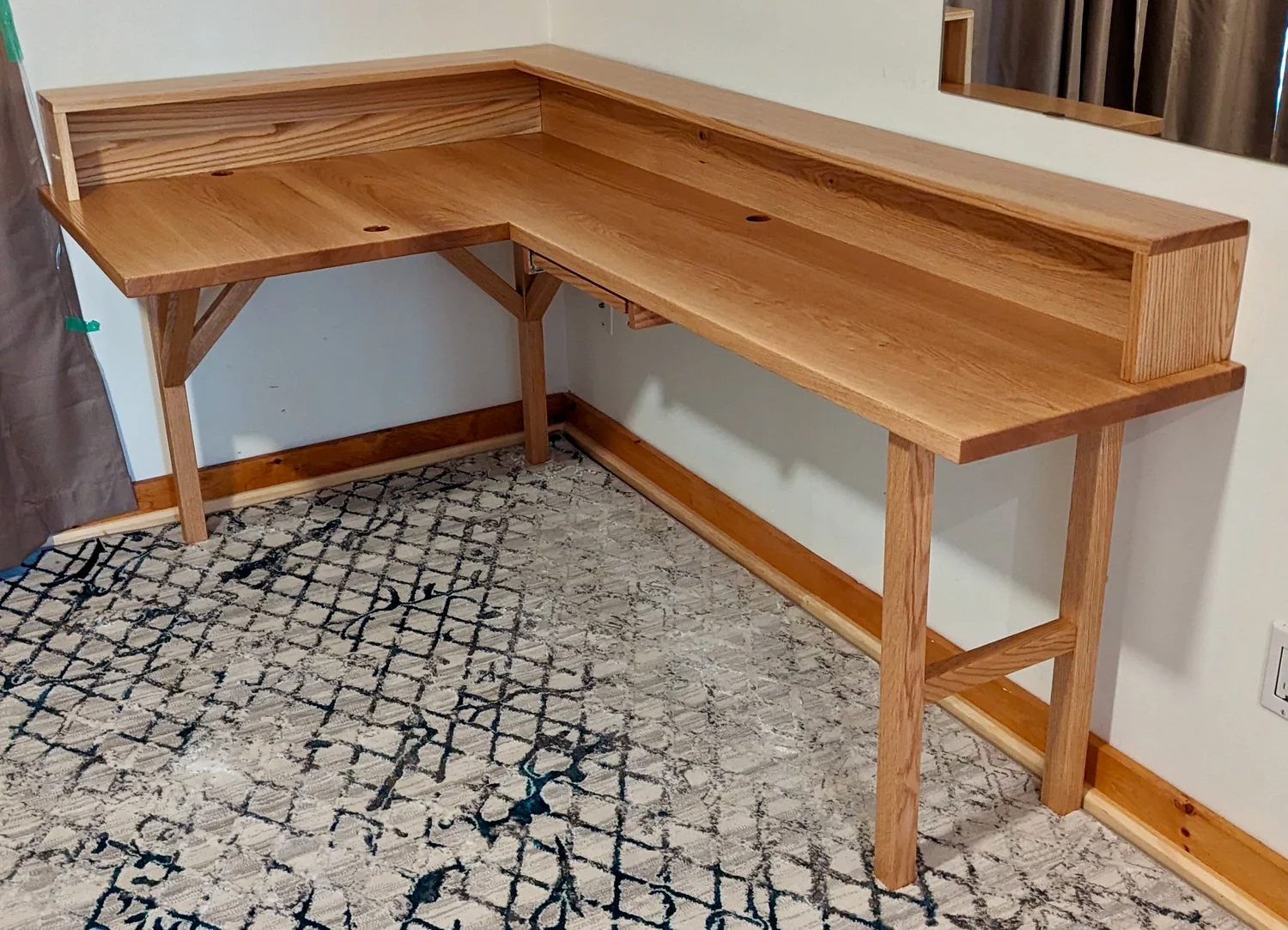
You’ve done the rounds. You’ve walked the showroom floors, scrolled through page after page of product listings, and bookmarked what felt like a hundred sofas, dining tables, and media units — only to close the laptop feeling vaguely disappointed. Nothing is quite right. The dimensions are close but not perfect. The finish looks good in the photo but you’re not sure how it’ll hold up. The price tag is reasonable, but you’ve bought “reasonable” before and it ended up on the curb three years later.
Sound familiar?
If you’re in that frustrating in-between space — not totally sure whether a furniture store will do or whether it’s time to call a custom woodworker — this guide is for you. There’s no right or wrong answer for everyone, but there are clear signs that a bespoke furniture maker is actually the smarter, more satisfying choice. Here are five of them.
1. Your Space Has Unusual Dimensions (and You’re Tired of Making Things “Work”)
The most common reason people come to us at Black Barrel Wood Co. isn’t extravagance — it’s practicality. They have a dining room that’s just a bit too narrow for a standard 36-inch table. A staircase landing with an awkward angle that no off-the-shelf bookcase will ever fit. A kitchen with a dead corner that a stock cabinet solution simply can’t address.
When Standard Sizes Just Don’t Cut It
Retail furniture is built to hit the broadest possible market. That means standard heights, standard depths, and standard widths designed to fit most rooms — not your room. When your space falls outside that middle of the bell curve, you’re left with two options: compromise, or go custom.
A custom woodworker doesn’t work from a catalogue. They work from your measurements, your floor plan, and your actual life. Every millimetre is intentional. When you sit down to a table that fits your space perfectly — not almost perfectly — the difference is immediately obvious.
If you’ve ever said “we’ll just make it work” about a piece of furniture, that’s a sign.
2. You Want the Piece to Last More Than a Decade
Let’s be honest about what a lot of retail furniture is made from: particleboard, MDF, and veneers held together with dowels and cam locks. None of those are inherently evil materials — they have their place — but they’re not designed for heirloom longevity. They’re designed for affordability and efficiency at scale.
Handmade Furniture vs Retail: A Matter of Materials and Methods
When you’re weighing handmade furniture vs retail, one of the biggest differences is what’s actually inside the piece. A bespoke furniture maker works with solid hardwoods — white oak, walnut, maple, cherry — species chosen for their grain, their durability, and how they’ll age over time. Joinery is done with traditional woodworking techniques: mortise and tenon, dovetail, hand-cut dados. These methods create furniture that gets better with age rather than falling apart under it.
Think about the furniture you grew up with — the pieces that have been around your family for generations. Odds are good they weren’t flat-packed. They were built by someone who understood that furniture should outlast trends, scratches, and decades of daily use.
If you’re investing in a piece for a forever home, or you want something you can one day pass down, the furniture maker vs furniture store calculation shifts significantly in favour of the maker.
3. You Have a Specific Vision (and Can’t Find It Anywhere)
Maybe you’ve been pinning ideas for two years. You know exactly the wood tone, the leg profile, the hardware finish, and the drawer configuration you want. You’ve looked everywhere. You’ve come close a few times, but “close” isn’t the same as right.
The Catalogue Has Limits — Your Imagination Doesn’t
Retail furniture is curated to appeal to the largest possible audience. That means the truly distinctive pieces — the ones with real character and specificity — tend to get filtered out. What’s left is safe, broadly appealing, and often just a little generic.
A bespoke furniture maker exists precisely for the person who knows what they want but can’t find it in any showroom. You bring the vision; the craftsperson brings the expertise to make it real. Want a coffee table with a waterfall edge in figured walnut? A built-in bookcase with integrated lighting and a ladder rail? A dining bench with hand-carved detailing that echoes your home’s Arts and Crafts architecture? These are conversations a custom woodworker is built for.
4. You’re Designing Around a Specific Wood Species or Finish
This one is more nuanced but comes up more often than you’d expect. Some clients come to us not because they have a size problem or a design problem, but because they’ve fallen in love with a specific material. They want live-edge black walnut, or they’ve got reclaimed barn board from a family property they want turned into a dining table. They want the warmth of white oak with a custom oil finish that won’t look like anything else on the market.
Custom Finishes and Species Are Rarely a Retail Option
Walk into any big-box furniture store and your wood finish options are usually something like: light, medium, dark, or grey-wash. That’s the extent of it. Stains are applied industrially for consistency, not character.
A custom woodworker gives you genuine control over the material. You can choose the species, the cut (flat-sawn vs quarter-sawn vs rift-sawn), the finish type (oil, wax, lacquer, hardwax), and the sheen level. You can request that the natural grain and character marks be preserved and celebrated rather than hidden under a uniform coating.
If the material itself matters to you — and for a lot of people, it really does — that’s a strong indicator that the furniture maker vs furniture store question has already answered itself.
5. You’ve Already Bought Cheap Twice and You’re Done
This one is perhaps the most relatable sign of all. You bought the dining table on sale. It scratched within the first month. You bought the media unit that looked great in photos and arrived in fourteen flat-pack boxes with hardware that stripped on the first try. It wobbled. You shimmed it. It still wobbled.
The Real Cost of “Affordable” Furniture
There’s a phrase that gets used a lot in the trades: buy once, cry once. The idea is that it’s often cheaper in the long run to invest significantly once in something well-made than to replace budget pieces every few years. When you factor in the replacement cost, the disposal headache, and the sheer frustration of starting the search over again, the economics of custom furniture start looking a lot more sensible.
This doesn’t mean custom woodworking is for everyone’s budget — and a good bespoke furniture maker will always be upfront with you about pricing and what’s achievable at different investment levels. But if you’ve gone through the cycle of buying and replacing and you’re ready for a piece you won’t have to think about again, that’s a meaningful shift in how you should be approaching the decision.
So, Furniture Maker vs Furniture Store — Which Is Right for You?
Here’s the honest answer: both have their place. If you need a set of guest room nightstands quickly, a furniture store is perfectly reasonable. Not every piece in your home needs to be custom-built from solid hardwood by a craftsperson.
But for the pieces that matter — the dining table where your family will gather for the next twenty years, the built-in bookshelves that will define your living room, the desk where you’ll do your best work — those are the pieces worth doing properly. Those are the pieces where the furniture maker vs furniture store question has a clear answer.
At Black Barrel Wood Co. in Innisfil, Ontario, we work with clients across Barrie, Newmarket, and the Greater Simcoe County area to build furniture that fits their spaces, their lives, and their standards. We’re not a showroom. We’re a workshop. And we build things that last.
Have a project in mind? Let’s start the conversation.
Ready to start your own project?
Every piece is built to order in our Innisfil, Ontario studio. Reach out to discuss your vision.
Start a Project