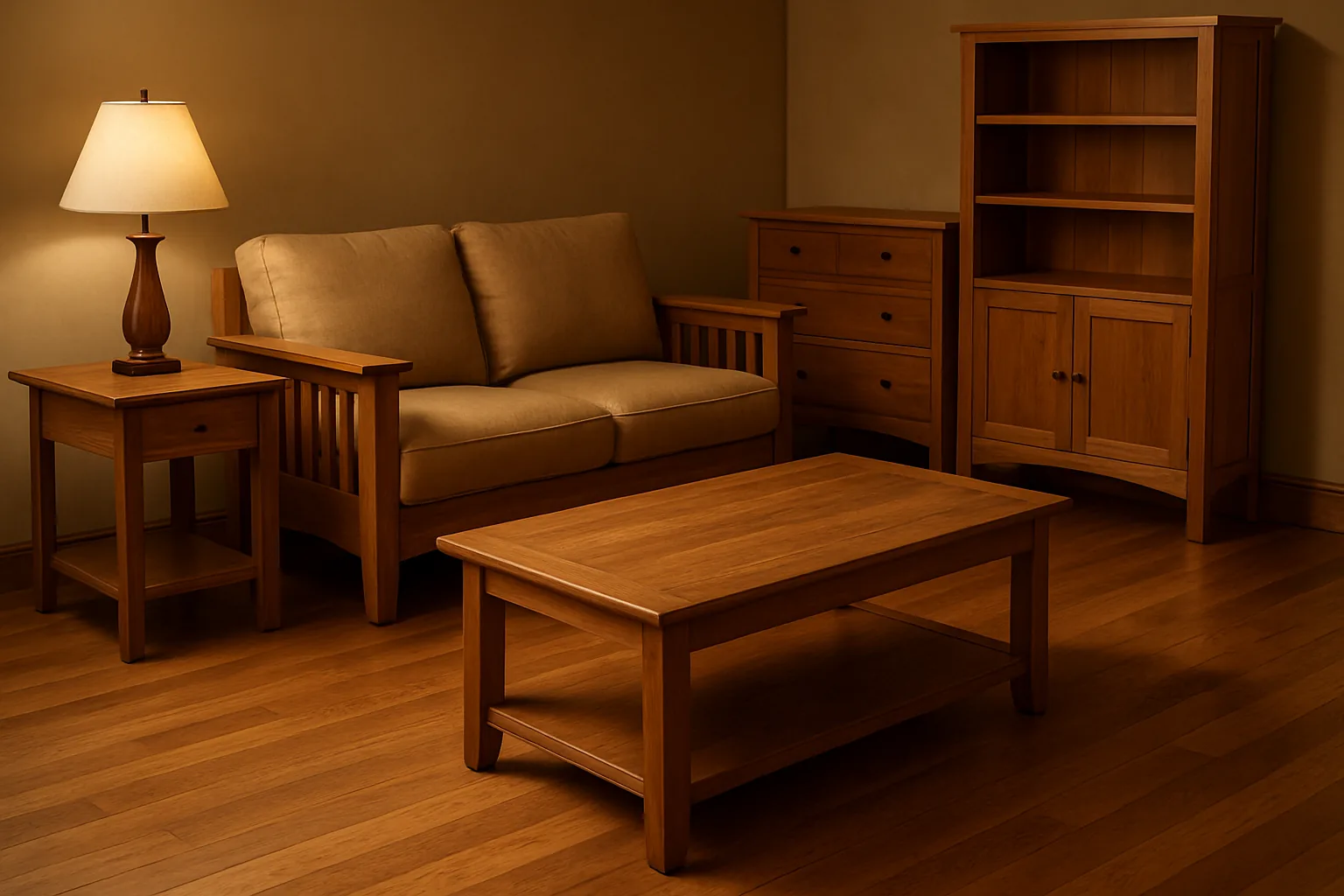
You’ve just fallen in love with a dining table or bookshelf, and then it hits you — will it actually work with your floors? If you’ve ever stood in a furniture store holding a tiny wood swatch up to a blurry photo on your phone, you’re not alone. Knowing how to match furniture to hardwood floors is one of the most common decorating challenges homeowners face, and it’s easier to get wrong than most people expect.
The good news? You don’t need a design degree to pull it off. You just need to understand a few key principles about wood tone, undertones, and visual contrast — and then trust your eye a little. This guide will walk you through everything you need to know before you bring a new piece into your space.
Why Wood Tone Matching Is Trickier Than It Looks
At first glance, matching wood seems straightforward: find something close in colour and call it a day. But wood is a living material (even after it’s been milled and finished), and its appearance shifts dramatically depending on the species, the stain, the grain pattern, and how light hits it throughout the day.
Two pieces that look nearly identical in a showroom can clash badly once they’re side by side in your home. That’s usually because of undertones — the subtle warm or cool hues hiding beneath the surface colour.
Understanding Warm vs. Cool Undertones
Most hardwood floors fall into one of two camps:
- Warm undertones — reds, oranges, yellows, and golden hues. Common in red oak, cherry, hickory, and many older-style stained floors.
- Cool undertones — greys, beiges, and ashy tones. More common in white oak, maple, and many modern wire-brushed or whitewashed finishes.
When you’re shopping for new furniture, your first job is to identify which camp your floor falls into. The easiest way to do this? Pull up your floor’s colour on your phone in natural daylight — morning light is especially revealing — and look for that underlying hue.
Once you know whether your floor runs warm or cool, you can make smarter decisions about furniture wood pairing.
The Three Approaches to Hardwood Floor Coordination
There’s no single “right” way to coordinate wood tones in a room. Most designers work within one of three approaches, and each one can look stunning when done intentionally.
1. Match Closely (Tone-on-Tone)
This approach aims for harmony by choosing furniture in a very similar wood tone to your floors. Think golden oak floors paired with honey-toned maple furniture, or a cool grey-washed floor alongside an ash dining table in a similar palette.
When it works well: In open-concept spaces where visual continuity is important, or in rooms where you want a calm, unified feel.
Watch out for: Pieces that are almost the same but not quite — this reads as an accident rather than a design choice. If you’re going tone-on-tone, commit to it.
2. Create Contrast (Light vs. Dark)
One of the most reliable and timeless strategies in hardwood floor coordination is pairing a light floor with dark furniture, or vice versa. A rich walnut dining table over pale maple floors? Stunning. Blonde oak furniture on a deep espresso-stained floor? Equally beautiful.
Contrast works because it gives each element room to breathe. Your floor and your furniture aren’t competing — they’re complementing each other.
When it works well: In smaller rooms where contrast can make the space feel more dynamic and intentional, or in homes with a modern or Scandinavian-influenced aesthetic.
3. Mix Tones Intentionally
This is the most nuanced approach, and honestly, it’s how most real homes look — a mix of different wood tones and finishes that have been collected over time. The key word here is intentionally. A room with four different wood tones can feel curated and layered, or it can feel chaotic, depending on whether there’s a unifying thread.
That thread might be a consistent undertone (all warm, or all cool), a repeated finish type (matte throughout), or a dominant tone that grounds everything else.
Practical Tips for Getting the Match Right
Now that you understand the theory, here’s how to apply it in real life.
Bring Samples Home — Always
Never make a final furniture decision based on a showroom or website photo. Lighting in stores is designed to make everything look good. Always request a wood sample or swatch and place it directly on your floor at home, in the room where the piece will live. Look at it in the morning, midday, and evening.
If you’re working with a custom furniture maker, ask for a finish sample before the piece goes into production. A good craftsperson will expect this request and welcome it.
Consider the Room’s Light Exposure
South-facing rooms bathed in warm afternoon light will intensify the yellow and orange tones in both your floors and your furniture. North-facing rooms tend to read cooler, amplifying grey and blue undertones. What looks like a perfect match in one room may look off in another — which is why bringing samples home matters so much.
Don’t Forget Finish Sheen
Wood tone gets most of the attention, but finish sheen is equally important. A high-gloss floor paired with a matte furniture finish creates a disconnect that can feel unintentional. Try to keep sheen levels roughly consistent across pieces in the same room — or, again, make the contrast deliberate.
Use Rugs as a Buffer
If you love a furniture piece but the tones aren’t quite landing, a well-chosen area rug can act as a visual bridge between your floor and your furniture. It breaks up the direct comparison between the two wood surfaces and gives your eye something else to anchor to. This is especially useful in living rooms and dining rooms where large furniture pieces sit directly on the floor.
When to Consider Custom Furniture
Sometimes the perfect piece simply doesn’t exist off the shelf. Your floors might have an unusual stain, a one-of-a-kind grain pattern, or a finish that was popular in a specific era — and nothing in a furniture store comes close.
This is where custom woodworking makes a genuine difference. When a piece is built from scratch, the maker can select the wood species, dial in the stain, and match the finish to what’s already in your home. The result isn’t just furniture that fits the space — it’s furniture that feels like it was always meant to be there.
If you’re struggling to find pieces that coordinate with your hardwood floors, we’d love to help you figure out the right approach. Bring us a photo of your floors (or better yet, a small sample), and we can talk through species, stain direction, and finish options together.
A Quick Reference: Common Floor Species and What Pairs Well
| Floor Species | Common Undertone | Works Well With |
|---|---|---|
| Red Oak | Warm (pinkish-red) | Walnut, cherry, warm-stained maple |
| White Oak | Neutral to cool | Ash, white-stained maple, natural walnut |
| Maple | Cool to neutral | White oak, birch, light ash |
| Cherry | Warm (deep red) | Walnut, mahogany, warm oak |
| Hickory | Warm (golden) | Walnut, oak, pecan |
| Wire-brushed/Whitewashed | Cool (grey-white) | Ash, white oak, bleached maple |
This table is a starting point, not a rulebook. Wood varies widely between boards, lots, and finishes — which is why sampling in your actual space is always the most reliable method.
The Bigger Picture: Let the Room Tell You What It Needs
The best-decorated rooms aren’t the ones where every wood tone is perfectly matched — they’re the ones that feel intentional and livable. Sometimes a slightly mismatched antique piece adds warmth and history to a modern room. Sometimes the “wrong” wood is the most interesting thing in the space.
Trust your instincts, apply the principles above as a guide, and don’t be afraid to ask for help when a decision feels overwhelming. That’s what we’re here for.
If you’re planning a furniture purchase or a custom build and want a second opinion on how it’ll coordinate with your floors, reach out to us at Black Barrel Wood Co. — we’re always happy to talk through a project, no commitment required.
And if you already know what you want and you’re ready to start planning a custom piece that’s designed specifically to work with your home’s existing hardwood, get in touch and let’s get started.
Ready to start your own project?
Every piece is built to order in our Innisfil, Ontario studio. Reach out to discuss your vision.
Start a Project