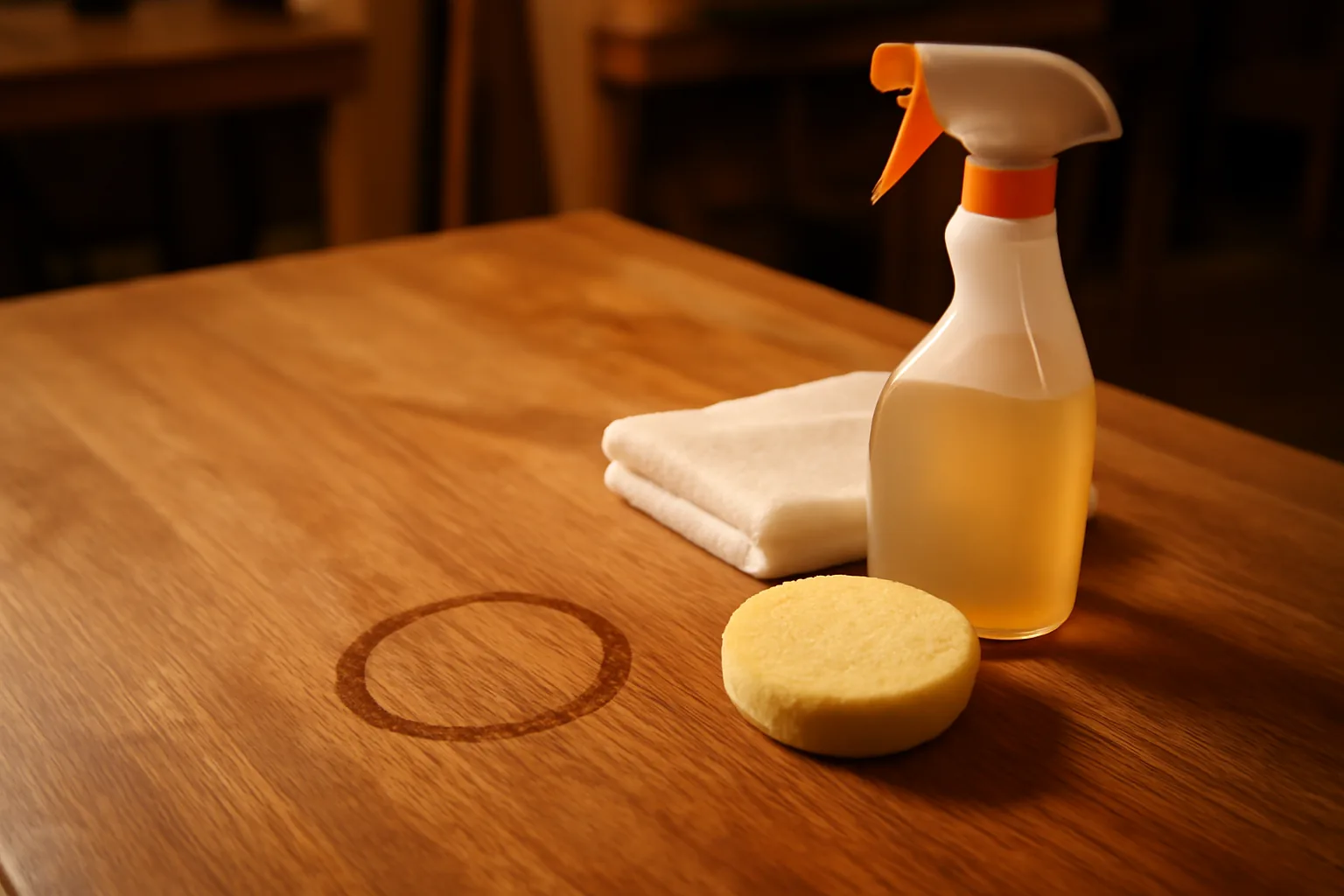
That white ring left behind by a sweating glass or a hot mug is one of the most common frustrations for hardwood furniture owners — and one of the most misunderstood. The good news? In most cases, water rings on hardwood furniture are more of a surface nuisance than a deep structural problem. With the right approach, many of them can be treated right at home.
This guide walks you through exactly how to remove water rings from hardwood furniture, from the gentlest DIY fixes to knowing when the damage goes deeper than a Saturday afternoon project can solve.
Understanding Why Water Rings Form on Hardwood
Before reaching for the mayo (yes, we’ll get there), it helps to understand what you’re actually dealing with.
Water rings typically fall into one of two categories:
- White rings — caused by moisture that has penetrated the finish layer and become trapped, scattering light and creating that milky, hazy appearance
- Dark rings — caused by water that has worked its way past the finish entirely and soaked into the wood itself, leaving behind tannin stains or early signs of wood rot
White rings are by far the more common of the two, and they’re usually very treatable at home. Dark rings are a different story — they almost always require sanding, refinishing, or professional furniture repair to properly address.
Knowing which type you’re dealing with is the critical first step.
Step 1: Identify the Type of Ring and the Finish
Take a close look at the stain in good lighting. White or light grey rings are a positive sign — the water hasn’t penetrated the wood. Dark brown or black marks mean you’re dealing with deeper staining.
Next, consider the finish on your furniture. Is it:
- Polyurethane or lacquer — common on modern and mass-produced pieces
- Oil or wax finish — often found on solid hardwood and custom furniture
- Shellac — an older finish, sometimes found on antiques
The finish type affects which water ring removal method will be safest and most effective. If you’re unsure, test any treatment on a hidden area first — the underside of a tabletop or the inside of a cabinet door are good spots.
DIY Methods for White Water Ring Removal
These methods are listed roughly from gentlest to most aggressive. Start at the top and work your way down only if needed.
Method 1: The Iron Trick
This method works well on white rings in polyurethane and lacquer finishes by using heat to draw the trapped moisture back out.
- Lay a clean, dry cotton cloth flat over the water ring — no moisture in the cloth
- Set your iron to the lowest heat setting with steam turned off
- Press the iron gently over the cloth for 5–10 seconds at a time
- Lift the cloth and check the ring after each pass
- Repeat until the ring fades
The key word here is gently. Too much heat, too fast, and you risk scorching the finish or warping the wood. Take your time and check frequently.
Method 2: Mayonnaise or Petroleum Jelly
A tried-and-true method that sounds odd but genuinely works — the oils in mayonnaise help displace trapped moisture from the finish.
- Apply a generous dollop of full-fat mayonnaise (or petroleum jelly) directly to the ring
- Leave it for several hours — overnight works best
- Wipe clean with a soft cloth and buff gently
This approach is particularly effective on wax and oil finishes. It’s slow, but it’s safe and requires almost no effort.
Method 3: Non-Gel Toothpaste
Toothpaste works as a very mild abrasive that can buff out shallow rings in harder finishes.
- Apply a small amount of plain white toothpaste (not gel) to a soft cloth
- Rub gently in the direction of the wood grain
- Work in small circles on the stain itself
- Wipe clean and assess the result
Don’t overdo the pressure here. The goal is to lightly work the surface, not strip it.
Method 4: Fine Steel Wool and Paste Wax
This method is for more stubborn white rings on wax-finished furniture and requires a careful hand.
- Apply a small amount of paste wax to a pad of 0000-grade (ultra-fine) steel wool
- Rub with the grain — never against it — using light, even pressure
- Buff off with a clean cloth once the ring has faded
This method very lightly abrades the surface, so use it sparingly and only on finishes that are otherwise in good condition.
When DIY Isn’t Enough: Dealing with Dark Rings and Deep Staining
If you’re working with a dark water ring, or if multiple DIY attempts haven’t moved the needle on a white ring, it’s time to reassess.
Dark rings on hardwood furniture typically mean the moisture bypassed the finish layer entirely and reacted with the tannins in the wood. This type of hardwood furniture stain can sometimes be treated with oxalic acid (wood bleach), but that process involves neutralizing the acid afterward and refinishing the affected area — it’s not a casual weekend project.
In many cases, the most practical path forward is:
- Spot sanding the affected area back to bare wood
- Bleaching or spot-treating the stain
- Refinishing to blend the repair seamlessly with the surrounding surface
This is especially true for heirloom pieces, dining tables, and furniture with complex or aged finishes where matching the original colour and sheen requires experience.
If you’ve got a piece that means something to you — or one that simply costs too much to risk getting wrong — we’re happy to take a look and give you an honest assessment. No pressure, just a straight answer about what your options are.
Protecting Hardwood Furniture After Water Ring Removal
Once you’ve successfully treated the ring, a little prevention goes a long way.
Use Coasters and Trivets — Seriously
It sounds obvious, but the single most effective thing you can do for hardwood furniture is to create a habit around using coasters for cold drinks and trivets for hot dishes and mugs. Even a sealed finish can be compromised by prolonged moisture contact.
Refresh the Finish Regularly
Over time, finishes wear down — especially on heavily used surfaces like dining tables and coffee tables. A wax or oil finish should be reapplied every 6–12 months. Polyurethane finishes last longer but may need spot repair or a full recoat after several years of regular use.
Keep Humidity Levels Stable
This one is easy to overlook, but hardwood furniture is sensitive to humidity fluctuations. Aim to keep your home between 40–55% relative humidity year-round. Seasonal swings can cause the wood to expand, contract, and eventually crack — and they can also make it more susceptible to moisture damage.
When to Call a Professional for Furniture Repair
There’s no shame in knowing when a repair is beyond the scope of DIY. Here are a few clear signals:
- The ring has darkened or left a visible mark in the wood itself
- The finish has bubbled, peeled, or delaminated around the stain
- The piece is an antique, a custom build, or has sentimental or monetary value
- Multiple DIY attempts have made the area look worse, not better
At Black Barrel Wood Co., we work with solid hardwood furniture of all kinds — from family heirlooms and dining tables to custom pieces we’ve built ourselves. Water ring removal, spot refinishing, and full restoration are all part of what we do.
If you’re not sure whether your piece can be saved with a DIY fix or needs a professional hand, reach out through our contact page and share a photo. We’ll give you an honest read on the situation.
A Final Word on Hardwood Furniture Stains
Hardwood is resilient. It’s one of the reasons people love it — and one of the reasons it’s worth repairing rather than replacing. A water ring that looks alarming at first glance is, in most cases, a solvable problem.
Start with the gentlest method that fits your finish type, be patient, and work in the direction of the grain. Most white rings will respond to one of the methods above without any need for professional intervention.
And for the ones that don’t? That’s what we’re here for. Get in touch with the team at Black Barrel Wood Co. and let’s figure out the best path forward for your piece.
Ready to start your own project?
Every piece is built to order in our Innisfil, Ontario studio. Reach out to discuss your vision.
Start a Project