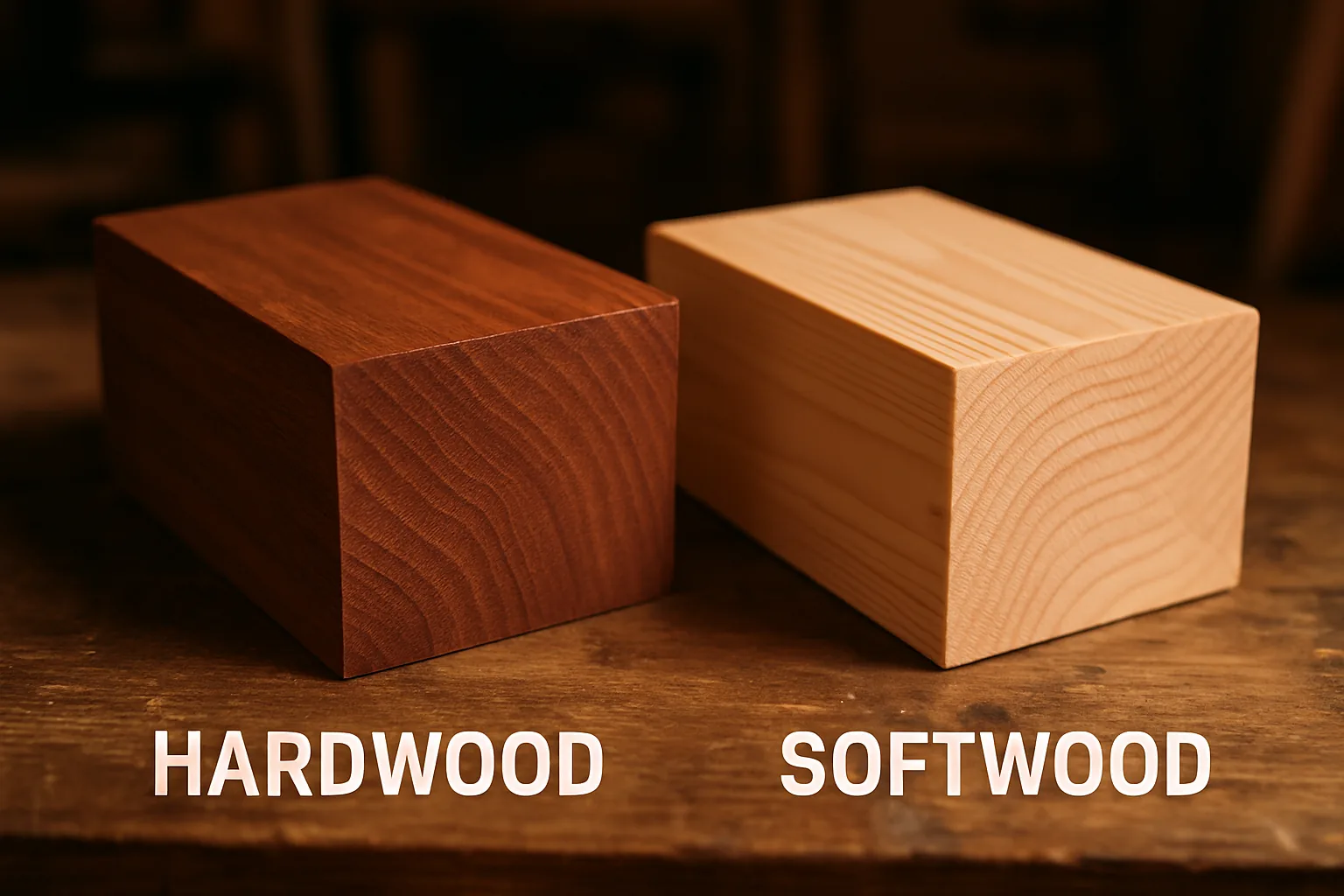
If you’ve ever started shopping for a dining table, a bookshelf, or a custom bed frame and found yourself completely lost the moment someone asked “hardwood or softwood?”—you’re not alone. It’s one of the most common questions we hear from first-time furniture buyers, and honestly, it’s a great one to ask.
The hardwood vs softwood for furniture debate isn’t just technical woodworker talk. Understanding the difference can genuinely help you make a smarter purchase, choose a piece that holds up to your lifestyle, and feel confident about where your money is going. So let’s break it down in plain language—no sawdust required.
What Actually Makes a Wood “Hard” or “Soft”?
Here’s where a lot of people get tripped up: the terms hardwood and softwood don’t actually refer to how physically hard or soft the wood feels. They’re botanical categories based on the type of tree the wood comes from.
- Hardwoods come from deciduous trees—trees that lose their leaves each year. Think oak, maple, walnut, cherry, and ash.
- Softwoods come from coniferous trees—the evergreens with needles and cones. Think pine, cedar, spruce, and fir.
That said, there is often a correlation between the category and physical hardness. Most hardwoods are denser and more durable than most softwoods—but not always. Balsa wood, for example, is technically a hardwood but is famously light and easy to dent. Meanwhile, some pines are surprisingly tough.
When it comes to furniture, the distinction matters for practical reasons: how the wood ages, how it handles daily wear, how it takes stain, and how long it lasts.
Hardwood for Furniture: What You Need to Know
Durability That Stands the Test of Time
Hardwoods are the workhorse of the furniture world. Their denser grain structure makes them resistant to dents, scratches, and general wear—which is why you’ll find them in heirloom dining tables, solid wood bedroom sets, and fine cabinetry. If you’re looking for furniture that your grandchildren might one day fight over, hardwood is almost always the answer.
Common hardwoods used in furniture include:
- White Oak – A crowd favourite. Strong, beautiful grain, and naturally resistant to moisture. Great for tables, chairs, and cabinetry.
- Hard Maple – One of the hardest domestic species. Smooth and light-coloured with a subtle grain. Often used in butcher blocks and desktops.
- Black Walnut – Rich, chocolatey tones and a gorgeous natural figure. A premium choice for statement pieces.
- Cherry – Starts light and deepens to a warm reddish-brown over time. Elegant and timeless.
- Ash – Strong and flexible with a pronounced grain. A great mid-range hardwood.
How Hardwood Handles Finishing
One of the best things about hardwood is how well it accepts stains, oils, and finishes. The tight grain means you get even, consistent results whether you’re going for a natural matte look or a rich, deep stain. Hardwood also responds beautifully to hand-rubbed oil finishes—a technique we use frequently here at Black Barrel Wood Co.
The Trade-Off: Cost
Quality comes at a price. Hardwoods are generally more expensive than softwoods, both because of the raw material cost and because they’re often more labour-intensive to work with. But for most furniture applications, it’s an investment that pays off over decades.
Softwood for Furniture: More Capable Than You’d Think
Affordable, Workable, and Widely Available
Softwoods get an unfair reputation in furniture conversations. Yes, they’re less dense than most hardwoods—but that doesn’t mean they can’t make excellent furniture. In fact, pine has been used to build furniture for centuries, and plenty of those pieces are still standing.
Common softwoods used in furniture include:
- Pine – The most widely used softwood for furniture. Affordable, easy to work with, and takes paint well. Knotty pine has a rustic charm that suits cottage and farmhouse styles beautifully.
- Cedar – Naturally aromatic and insect-resistant. Often used in chests, closet linings, and outdoor furniture.
- Fir – Strong for a softwood and often used in structural furniture or pieces where it will be painted.
Where Softwood Shines
Softwood furniture tends to work best in lower-traffic applications—a bedroom dresser, a decorative shelving unit, a painted cottage bench. It’s also an excellent choice when budget is a priority without sacrificing the warmth of real wood.
Softwoods are lighter and easier to cut and shape, which makes them faster to work with. For painted pieces especially, softwood can be an entirely sensible choice—you won’t see the grain anyway, so why pay a premium for walnut?
Where Softwood Falls Short
In high-use environments—around a dining table, in a busy kitchen, or anywhere kids are involved—softwood’s lower density means it’s more prone to dents and scratches. It can also be trickier to stain evenly due to its more porous, varied grain structure. Blotch-resistant primer or a wood conditioner can help, but it’s an extra step.
Hardwood vs Softwood for Furniture: A Quick Comparison
| Feature | Hardwood | Softwood |
|---|---|---|
| Source | Deciduous trees | Coniferous trees |
| Density | Higher | Lower |
| Durability | Excellent | Good (lower-traffic use) |
| Cost | Higher | Lower |
| Staining | Even, consistent | Can blotch without prep |
| Best For | Tables, chairs, cabinets | Painted pieces, bedroom furniture, cottage style |
| Common Species | Oak, Walnut, Maple, Cherry | Pine, Cedar, Fir |
How to Choose the Right Wood for Your Furniture
Think About How You’ll Use It
The single most important factor in furniture wood selection is how the piece will be used. A dining table that seats six for every family dinner needs a different material than a decorative side table in a quiet corner of your living room.
Ask yourself:
- How much daily wear will it see? High traffic = choose hardwood.
- Will it be painted or stained? Painted = softwood is fine. Stained natural = hardwood is your friend.
- What’s your budget? Softwoods offer beautiful results at a lower price point.
- What style are you going for? Rustic and casual = pine works great. Modern or heirloom = hardwood all the way.
Consider the Environment
Here in Central Ontario, we deal with seasonal humidity swings that can affect wood movement year-round. Hardwoods generally handle this more gracefully, but proper finishing and construction techniques matter enormously regardless of the species. This is one area where working with an experienced maker—rather than buying off a shelf—makes a real difference.
Don’t Overlook the Aesthetic
Beyond function, different wood types simply look different—and that matters. The tight, subtle grain of hard maple feels completely different from the bold, open grain of white oak. Walnut has a warmth that cherry doesn’t, and pine has a casual honesty that no hardwood can quite replicate.
If you’re unsure which direction to go, we’re always happy to walk you through your options. Get in touch with us at Black Barrel Wood Co. and we can talk through your project, your lifestyle, and which wood species makes the most sense for what you’re building.
A Note on Engineered and Composite Woods
Before we wrap up, it’s worth briefly mentioning that “hardwood” and “softwood” are both distinct from engineered wood products like MDF, plywood, or particleboard. These materials have their place in furniture manufacturing—especially in painted cabinetry and flat-pack furniture—but they behave very differently from solid wood and aren’t typically what people mean when they say they want a “real wood” piece.
At Black Barrel Wood Co., we work exclusively in solid wood—both hardwood and softwood depending on the project—so you’ll always know exactly what you’re getting.
Ready to Choose the Right Wood for Your Next Piece?
Understanding the hardwood softwood difference is a great first step, but every project has its own nuances. The best furniture decisions happen in conversation—when someone who knows the material can listen to how you live, what you love, and what you’re trying to build.
If you’re planning a custom furniture project in Innisfil, Barrie, or anywhere in the Simcoe County area, we’d love to help. Reach out to the team at Black Barrel Wood Co. to start the conversation—no obligation, just an honest chat about wood and what we can make together.
And if you’re still in the early research phase, that’s perfectly fine too. Bookmark this page, take your time, and when you’re ready, we’ll be here.
Ready to start your own project?
Every piece is built to order in our Innisfil, Ontario studio. Reach out to discuss your vision.
Start a Project