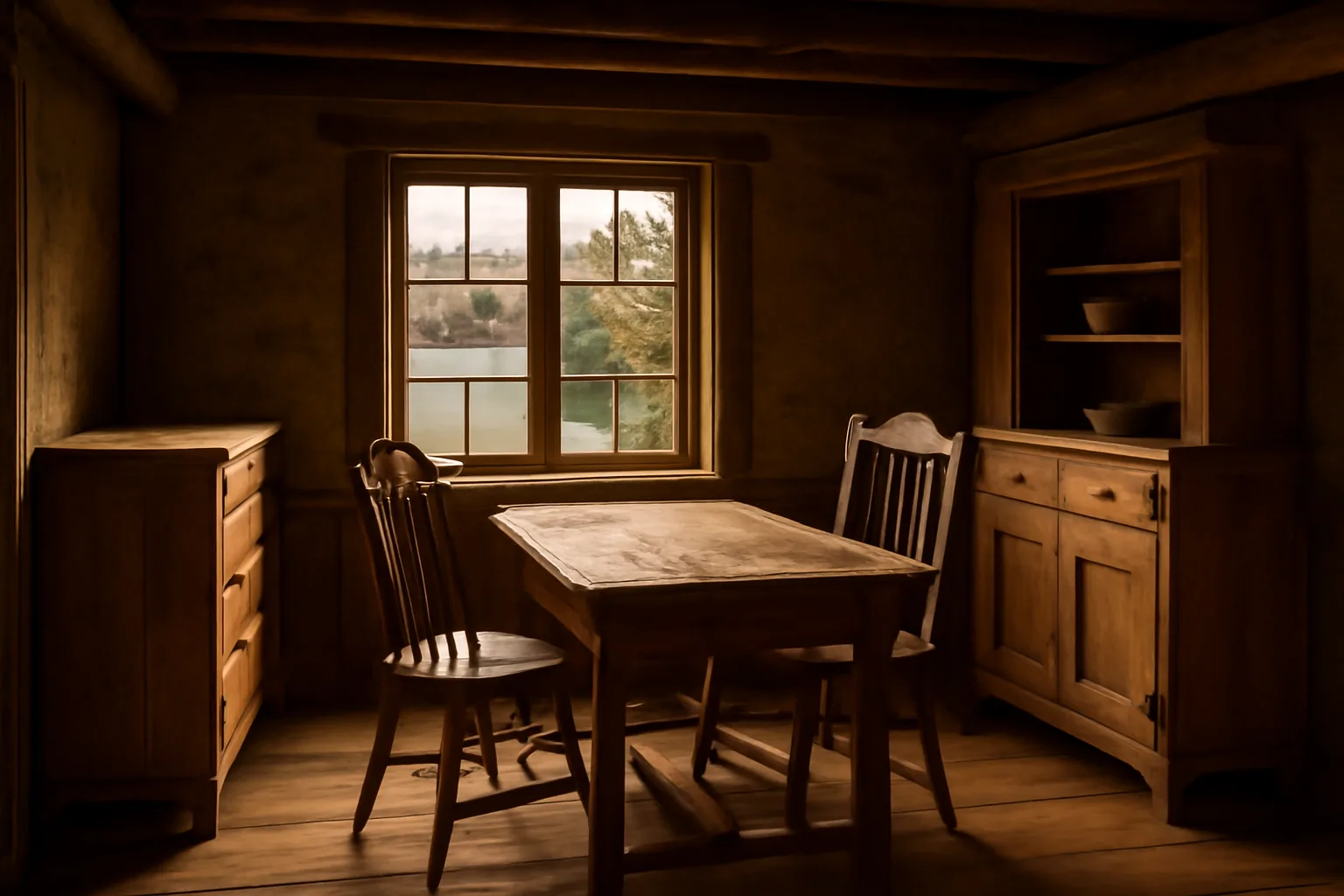
If you’ve ever opened up the cottage after a long Ontario winter and noticed a drawer that won’t close, a tabletop with a hairline crack, or a chair leg that’s taken on a subtle but stubborn lean — you already know that not all wood is created equal when it comes to cottage life.
Cottages are genuinely hard on wood. Between the freeze-thaw cycles of a Canadian winter, the high humidity of a summer lakeside, and the casual, heavy-use nature of cottage living, your furniture faces more stress than most pieces in a climate-controlled home ever will. Choosing the best wood species for cottage furniture isn’t just an aesthetic decision — it’s a practical one that affects how long your pieces last and how much maintenance they’ll demand over the years.
Here’s what you need to know before you buy or build.
Why Cottage Environments Are Uniquely Challenging for Wood
Wood is hygroscopic — meaning it naturally absorbs and releases moisture from the surrounding air. In a stable indoor environment, this happens gradually and predictably. In a cottage, it happens dramatically and repeatedly.
The Moisture Problem
Ontario cottages, especially those near Georgian Bay, Lake Simcoe, or the Kawartha Lakes, experience significant seasonal humidity swings. Summer air near the water can push indoor humidity above 70%, while a heated cottage in January or February may drop to well below 30%. That 40-point swing causes wood to expand and contract across the grain — and that movement, over years, leads to cracking, warping, joint failure, and finish peeling.
Temperature Swings
Many cottage owners heat their properties only seasonally, or even just on weekends. This means the wood inside regularly cycles between near-freezing and comfortable living temperatures. Dense, stable hardwoods handle this far better than softer, more porous species.
Heavy Use Without Much Fuss
Let’s be honest — cottage furniture takes a beating. Wet bathing suits, sandy feet, cold drinks without coasters, and the general enthusiasm of people on vacation. The best cottage furniture materials need to be forgiving enough to live with, and durable enough to survive it all.
The Best Wood Species for Cottage Furniture
Not every beautiful wood belongs in a cottage. Here’s a breakdown of the species we most commonly recommend — and why.
White Oak: The Gold Standard for Cottage Durability
If there’s one wood that consistently earns top marks in cottage environments, it’s white oak. White oak has a closed-grain structure, meaning it naturally resists moisture penetration far better than red oak or many softer species. It’s dense, stable, and takes a finish beautifully.
Why it works at the cottage:
- Closed-grain structure limits moisture absorption
- Excellent hardness (Janka rating of ~1360 lbf) resists dents and scratches
- Ages gracefully, developing a warm, honey-toned patina over time
- Widely used historically in boat building — enough said about its moisture credentials
White oak is an excellent choice for dining tables, benches, and cabinetry in cottage kitchens and bathrooms where humidity is highest.
Black Walnut: Rich, Stable, and Built to Last
Black walnut is one of the most dimensionally stable hardwoods available in Ontario. It doesn’t move around as much as many other species when humidity changes, which makes it a strong candidate for furniture with fitted drawers, doors, or precise joinery.
Why it works at the cottage:
- Higher natural oil content helps resist moisture absorption
- Exceptional dimensional stability reduces warping and checking
- Deep, rich colour adds warmth to rustic and modern cottage interiors alike
- Hard enough for everyday use, but not so hard it’s prone to chipping
Walnut is particularly well-suited for bedroom furniture, coffee tables, and pieces that need to look great for decades without a lot of intervention.
Hard Maple: Tough as Nails for High-Traffic Pieces
Hard maple is one of the densest domestic hardwoods available, and it earns its place in cottage environments through sheer toughness. It’s the wood used in bowling alleys and butcher blocks — which tells you something about its durability under punishing conditions.
Why it works at the cottage:
- Exceptional hardness and wear resistance
- Takes a finish extremely well for easy cleaning
- Light, uniform colour suits both traditional and contemporary cottage aesthetics
- Cost-effective compared to walnut without sacrificing performance
Maple shines as a cottage furniture material in kitchen countertops, islands, bunk beds, and anywhere you expect sustained heavy use.
Eastern White Cedar: The Outdoor Specialist
For anything spending time on the deck, screened porch, or in a boathouse, Eastern white cedar is hard to beat. It contains natural oils that are inherently resistant to rot, insects, and moisture — the same properties that have made it a staple in Ontario dock and boat construction for generations.
Why it works at the cottage:
- Natural preservatives resist rot without heavy chemical treatment
- Lightweight, making it easy to move seasonal furniture
- Weathers beautifully to a silver-grey if left unfinished outdoors
- Sustainably harvested across Ontario and the broader Canadian Shield region
Cedar isn’t ideal for indoor furniture that needs to hold up to hard use — it’s relatively soft. But for outdoor seating, side tables, and decorative pieces that will see rain and sun, it’s a genuinely excellent choice.
Wood Species to Use with Caution at the Cottage
Understanding what not to use is just as important as knowing what works.
Pine
Pine is charming, affordable, and ubiquitous in cottage décor — and while it has its place, it’s worth going in with realistic expectations. Pine is soft, dents easily, and is more susceptible to moisture damage than the hardwoods listed above. Painted pine furniture can work well in lower-humidity areas of the cottage, but exposed pine in a bathroom or near a lake entrance will show its age quickly.
Bamboo (Engineered Panels)
Bamboo flooring and furniture panels have become popular for their sustainability story, but they perform poorly in high-humidity environments. The adhesives used in engineered bamboo products can fail when exposed to repeated moisture cycles, leading to delamination and structural issues.
Exotic Tropical Hardwoods
Teak and ipe are genuinely durable options, but they’re worth a separate conversation. Both are exceptional for outdoor use, but sourcing matters — not all tropical hardwoods are harvested sustainably. If you’re considering these species for an outdoor cottage application, look for FSC-certified material and ask your woodworker about their supply chain.
Finishing Makes a Big Difference Too
Even the best wood species for cottage furniture will underperform if they’re finished incorrectly. For cottage environments, we generally recommend:
- Penetrating oil finishes (like hardwax oil or tung oil) for furniture that will see heavy use — these soak into the wood rather than sitting on top, so they don’t peel or bubble when moisture gets underneath
- Exterior-grade varnish or marine spar urethane for anything exposed to the elements
- Regular reapplication — most cottage furniture benefits from a fresh coat of oil or protective finish every year or two, especially pieces near windows or on screened porches
A well-maintained piece of white oak or walnut furniture can last generations. A poorly finished piece of any species will struggle through a single decade of cottage use.
Matching Wood Species to How You Actually Use Your Cottage
Every cottage is different, and the “right” wood depends on how you use the space. A family with four kids and a golden retriever has different needs than a couple who opens the cottage three weekends a summer. Some questions worth asking:
- Is this piece going indoors or outdoors?
- Will it be in a high-humidity area like a bathroom, mudroom, or sunroom?
- Does it need precise joinery (drawers, doors) that requires high dimensional stability?
- What’s your maintenance tolerance?
If you’re not sure which direction to go, we’re always happy to talk it through. Reach out to us at Black Barrel Wood Co. — we work with cottage owners across Innisfil, Barrie, and the surrounding area to design furniture that’s built specifically for how and where you live.
The Bottom Line
Choosing the right wood isn’t about finding the most expensive species or the trendiest look — it’s about understanding your environment and matching the material to the conditions it will actually face. White oak, black walnut, hard maple, and eastern white cedar each bring something valuable to the table (sometimes literally) depending on the application.
When you invest in well-chosen, properly finished hardwood furniture, you’re not just buying something for this summer. You’re buying something for the next thirty years of summers.
If you’re in the process of furnishing a cottage — whether you’re starting from scratch or replacing pieces that have finally given up the fight — we’d love to help you figure out the right path forward. Custom doesn’t have to mean complicated, and it almost always means better.
Have a specific cottage furniture project in mind? Get in touch with Black Barrel Wood Co. and let’s talk about what will work best for your space.
Ready to start your own project?
Every piece is built to order in our Innisfil, Ontario studio. Reach out to discuss your vision.
Start a Project