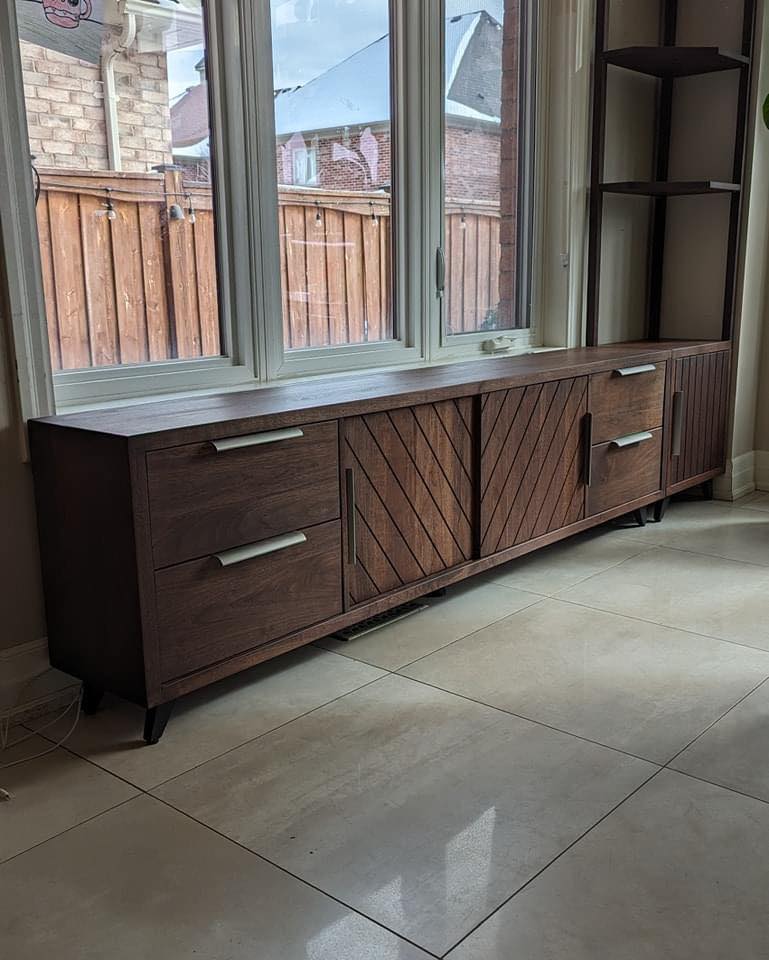
When clients come to us with a custom furniture project, one of the first decisions we make together is wood species. And the question we hear most often: should I go with black walnut or white oak?
Both are exceptional choices. Both will outlast the house they live in. But they are very different materials — and the right answer depends on your room, your lifestyle, and what you want the piece to say.
Here’s how we think about it.
Black Walnut: Rich, Dark, Dramatic
Black walnut is the prestige hardwood of North American furniture making. Its deep chocolate-brown heartwood — streaked with purple and gold — is unmistakable. No stain required. No apology for the grain. It simply looks expensive, because it is.
What makes walnut special:
- Colour that deepens with age and light exposure
- Straight to slightly wavy grain that takes fine detail exceptionally well
- Natural oils that make it naturally resistant to moisture
- A slightly softer hardness than oak — it develops a patina rather than scratching visibly
Best suited for: dining tables, desks, coffee tables, and built-in cabinetry where you want presence and warmth. It pairs beautifully with matte black steel hardware.
One honest caveat: walnut is among the most expensive domestic hardwoods. For large pieces — a harvest table that seats twelve — the premium adds up. We’ll always give you an honest quote.
White Oak: Timeless, Versatile, Durable
White oak is having a moment right now, and for good reason. Its pale honey-grey tones and pronounced ray fleck (the subtle shimmering lines that appear when the wood is quarter-sawn) give it an almost architectural quality. It reads as both traditional and contemporary.
What makes white oak special:
- Closed grain structure that resists moisture and staining — genuinely the better choice for dining tables in busy households
- Tighter, more consistent grain than red oak, which reads as quieter and more refined
- Takes oil finishes, hard wax oils, and water-based topcoats equally well
- Slightly harder than walnut, which means better scratch resistance on work surfaces
Best suited for: dining tables, kitchen cabinetry, open shelving, and anything that needs to work hard in a family environment. It’s our most-requested species for dining tables with young children in the house.
Side-by-Side Comparison
| Black Walnut | White Oak | |
|---|---|---|
| Colour | Dark chocolate to espresso | Pale honey to warm grey |
| Grain | Straight to wavy | Tight, with ray fleck |
| Hardness (Janka) | 1,010 lbf | 1,360 lbf |
| Moisture resistance | Good | Excellent |
| Price | Premium | Moderate |
| Best for | Prestige statement pieces | Durable everyday furniture |
What About the Other Species We Work With?
We work in cherry, hard maple, ambrosia maple, ash, hickory, birch, and red oak as well. Each has its own personality:
- Cherry ages from pale pink to a rich amber over years — it’s the wood that rewards patience
- Hard maple is the light, bright workhorse — ideal for desks and cutting surfaces
- Ash has a bold open grain that takes stain beautifully if you want a specific colour
- Hickory is the most character-rich of the bunch — dramatic colour variation, almost rustic in its honesty
The Honest Answer
If you’re drawn to dark, warm, and dramatic — choose walnut.
If you want something that will shrug off a decade of family dinners while still looking beautiful — choose white oak.
If you’re genuinely unsure, come out to the shop. We keep samples of everything, and it’s a different experience to hold a piece of wood than to look at a photo of it.
Ready to start your own project?
Every piece is built to order in our Innisfil, Ontario studio. Reach out to discuss your vision.
Start a Project